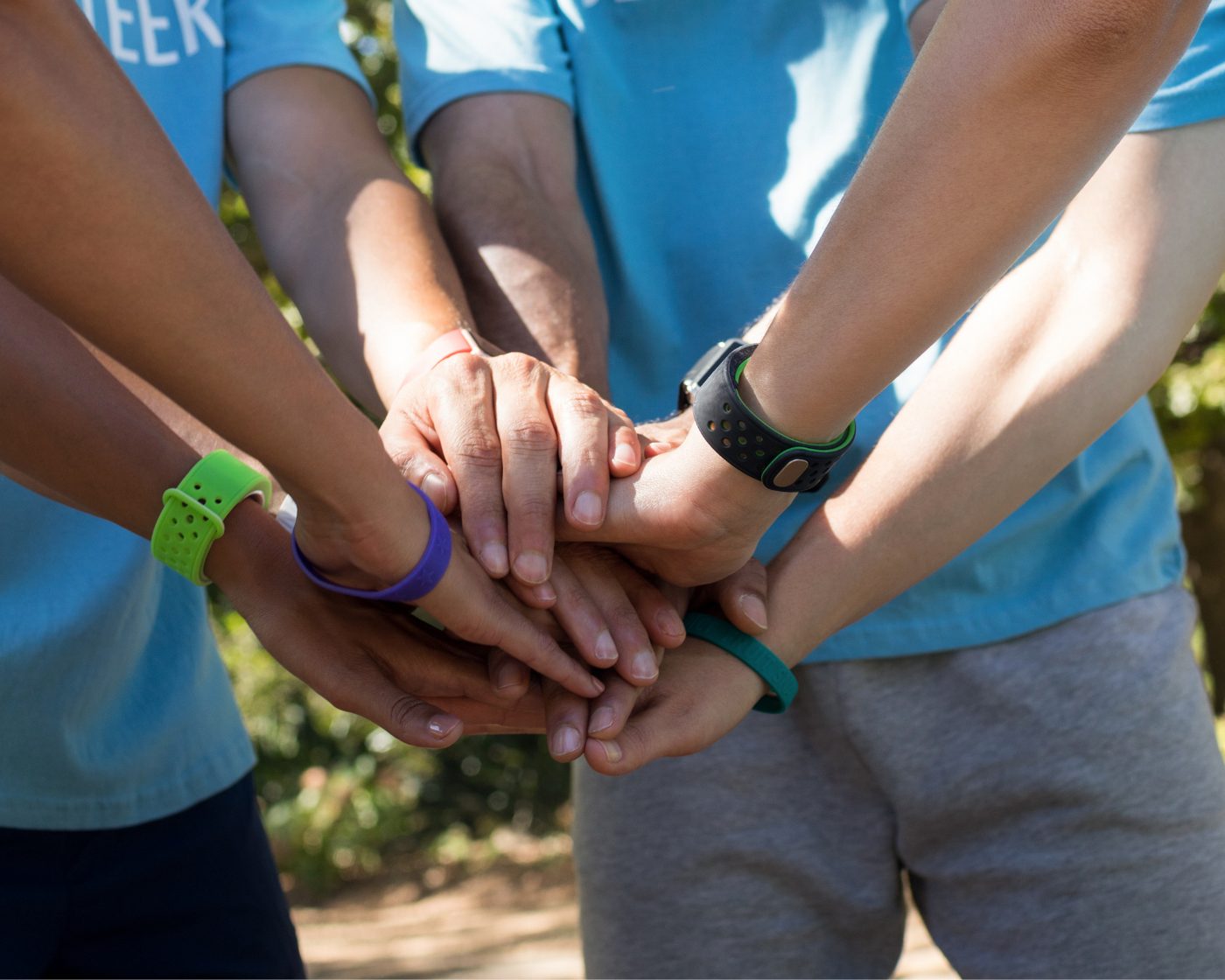
Most teenagers know the world is bigger than their school hallway. They have seen it on screens, heard about it in class, maybe even talked about it at church. But knowing something intellectually and feeling it in your bones are two very different things.
Community service closes that gap. It takes abstract ideas like empathy, responsibility, and justice and makes them physical. When a teenager spends a day painting a home for a family they have never met, or serving meals alongside people from a completely different background, something shifts inside them that no textbook or lecture could produce.
Here is why that shift matters so much during adolescence — and why every parent should be looking for ways to build service into their teenager's life.
Service Builds Empathy That Screens Cannot
Teenagers today are surrounded by information about suffering, inequality, and need. Social media delivers it constantly. But consuming that information from behind a screen does not build empathy. It often does the opposite — it creates numbness.
Service breaks through that numbness because it is physical, relational, and uncomfortable in exactly the right way. When a teenager sits across from someone whose life looks nothing like theirs and works alongside them on a shared goal, the distance collapses. The person stops being a category and starts being a human being.
Research on adolescent development consistently shows that hands-on service experiences produce measurable gains in perspective-taking and compassion — gains that persist long after the service project ends. These are not soft skills. They are foundational capacities that shape how a young person treats people for the rest of their life.
It Teaches Responsibility in a Way That Actually Sticks
Most teens encounter responsibility through obligations: homework, chores, sports practice. These are important, but they are also fundamentally about the teenager's own life and outcomes.
Service introduces a different kind of responsibility — the kind where other people are counting on you. When a group of teenagers commits to a weeklong service project, they discover quickly that showing up late or doing half-effort work has consequences that fall on someone else. That realization changes behavior faster than any parenting lecture.
Teenagers do not learn responsibility by being told about it. They learn it by being trusted with something that matters to someone other than themselves.
At Edge Impact's Tri-State Mission Trip, teens spend 10 days doing hands-on outreach and service work across New York, New Jersey, and Pennsylvania. They are not observers. They are workers. And that distinction — between watching and doing — is where real responsibility takes root.
It Exposes Them to Different Walks of Life
Most teenagers live in a fairly narrow world. Their social circle is shaped by their school, their neighborhood, their family's socioeconomic bracket. That is not anyone's fault. It is just how adolescent life works in most communities.
Service cracks that world open. It places teens in neighborhoods, communities, and situations they would never encounter on their own. They meet people with different stories, different struggles, and different strengths. And they discover that the assumptions they carried about how the world works were, at best, incomplete.
This exposure is not about guilt or pity. It is about accuracy. A teenager who has served in diverse contexts develops a more honest picture of the world they are growing up in — and a more grounded sense of their own place in it.
It Gives Them Purpose Beyond Themselves
Adolescence is, by design, a self-focused season. Teens are figuring out who they are, what they believe, what they want. That inward focus is normal and necessary. But when it has no outward counterbalance, it becomes consuming — and for many teens, it becomes the source of anxiety and a persistent sense of meaninglessness.
Service provides that counterbalance. It gives teenagers evidence that they matter — not because of their grades, their appearance, or their social media following, but because of what they can contribute. That evidence is powerful. It rewires how a young person sees their own value.
Psychologists refer to this as developing a prosocial identity: a self-concept built around contribution rather than consumption. Adolescents who develop it show lower rates of depression, higher resilience, and a stronger sense of direction as they move into adulthood.
How Edge Impact Builds Service Into Everything
At Edge Impact, community service is not a side activity or a one-day add-on. It is woven into the DNA of every program. The Tri-State Mission Trip is built entirely around outreach and service. Moto Camp dedicates a full day to community impact work. Even the Ski Weekends include intentional conversations about using your abilities for the benefit of others.
This approach reflects something the Edge Impact team has learned through more than 25 years of working with teenagers: adventure and fun get kids in the door, but service is what transforms them. Riding a dirt bike builds confidence. Serving alongside strangers builds character.
And the two are not in competition. They reinforce each other. A teen who pushes through a physical challenge on the motocross track carries that same determination into a service project. A teen who experiences the reward of meaningful work carries that sense of purpose into every other area of life.
Getting Started
If your teenager has never done meaningful community service, Edge Impact's programs are a strong starting point. They combine service with mentorship, adventure, and faith in an environment that is structured, safe, and genuinely fun.
- Tri-State Mission Trip — 10 days of hands-on outreach and service across the tri-state area. The most immersive service experience Edge Impact offers.
- Moto Camp — Motocross riding combined with a dedicated service day and daily mentorship. A great entry point for teens who need the adventure hook.
Scholarships are available for every program. Cost should never be the reason a motivated teenager misses out on an experience that could shape who they become.